
Driven by the dual demands of green travel and efficient logistics, the new Electric Tricycle, through technological iteration, is becoming an important player in the urban short-distance transportation industry. Technological upgrades have not only improved transportation efficiency but also achieved breakthroughs in safety, environmental friendliness, and intelligence. The following analysis is conducted from three aspects: technological advantages, core features, and application scenarios.
1. Technical Advantages: A Dual Leap in Efficiency and Safety
1. Optimization of Power System The new electric tricycle is equipped with a high-torque differential motor, providing stronger power output. It can easily handle slopes of 20%-30% under full load, significantly enhancing its transportation capability in complex road conditions. Models equipped with permanent magnet synchronous linear motors achieve high-precision linear motion control through the interaction between electromagnetic induction and permanent magnet magnetic fields, reducing energy loss and improving power conversion efficiency by over 30% compared to traditional motors.
2. Lightweight and High-Strength Material Application The vehicle body is constructed with corrosion-resistant and impact-resistant composite materials, combined with thickened steel and steel plate shock-absorbing structures, which not only reduces its own weight but also enhances its load-bearing capacity. The cargo box is treated with galvanizing or electrostatic spraying, meeting the ISO 9227 salt spray standard, extending its service life to more than twice that of traditional models.
3. The intelligent energy management system integrates a smart BMS battery management system to monitor battery status in real-time, optimize charging strategies, and extend the driving range. Some models are equipped with an energy recovery system that automatically charges during downhill or braking, increasing the driving range by 15%-20%. The 60V/72V lithium iron phosphate battery models can achieve a driving range of up to 120 kilometers on a single charge, meeting all-weather operation requirements.
4. Safety performance upgrade: The front windshield adopts automotive-grade laminated glass, with a 50% improvement in impact resistance, and is equipped with a 360° electric windshield wiper to enhance driving safety in rainy and snowy weather. The dual system design of electronic brake and mechanical handbrake shortens the braking distance by 30%, and combined with four-wheel independent suspension, the trunk remains level during turns to prevent cargo from toppling over.
II. Core Features: The Perfect Combination of Flexibility and Intelligence
1. Ultimate Flexibility The minimum turning radius is only 2.9 meters, allowing it to freely shuttle through narrow streets and old-fashioned residential areas. It can park closely to the curb without occupying public road resources. The folding electric tricycle innovatively adopts a dual rear wheel design. In daily use, the rear wheels are merged, giving it an appearance similar to a two-wheeled bicycle. After folding, its volume is reduced by 65%, making it easy to carry and store.
2. Intelligent operation experience: Equipped with intelligent instruments and LED LCD screen, it displays real-time information such as speed, battery level, and mileage. It supports Bluetooth APP unlocking, NFC card unlocking, and vehicle location and search functions. The intelligent light-sensing headlights automatically turn on in low light, enhancing nighttime driving safety. Some models also feature autonomous driving technology, which enables autonomous navigation through sensors and high-precision maps, freeing both hands and reducing the risk of human operational errors.
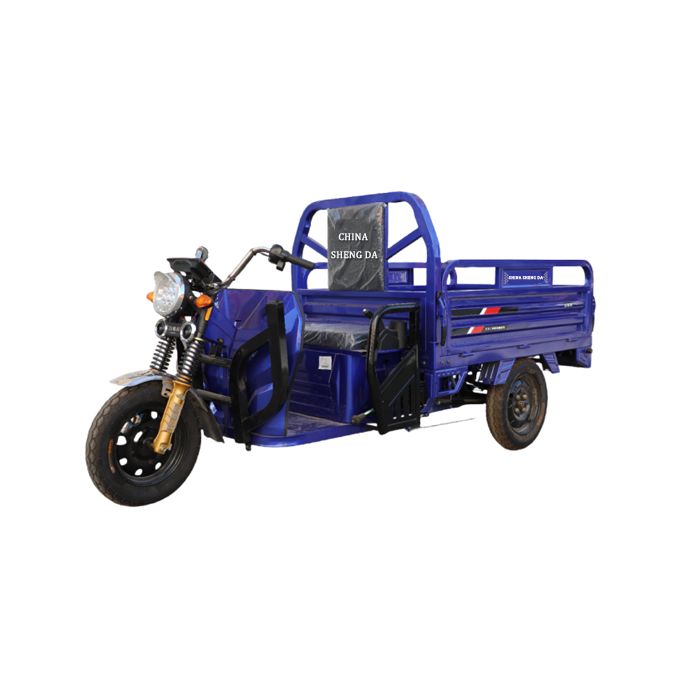
3. Modularity and Scalability: The cargo box adopts an integrated folding structure, enabling rapid expansion and contraction to meet the loading needs of different scenarios. The rear traction device can be expanded to accommodate a full range of products weighing from 0.5 tons to 2 tons, suitable for various types of cargo transportation, including light parcels for express delivery and heavy goods such as building materials.
III. Application Scenario: Covering the Entire Urban Transportation Chain
1. As the capillary connecting distribution centers with millions of households, the new electric tricycle has become the first choice for express delivery and supermarket distribution, leveraging its flexibility and low-cost advantages. Its zero-emission and low-noise characteristics allow it to legally enter zero-emission zones in urban core areas, completely eliminating the restrictions on diesel vehicles.
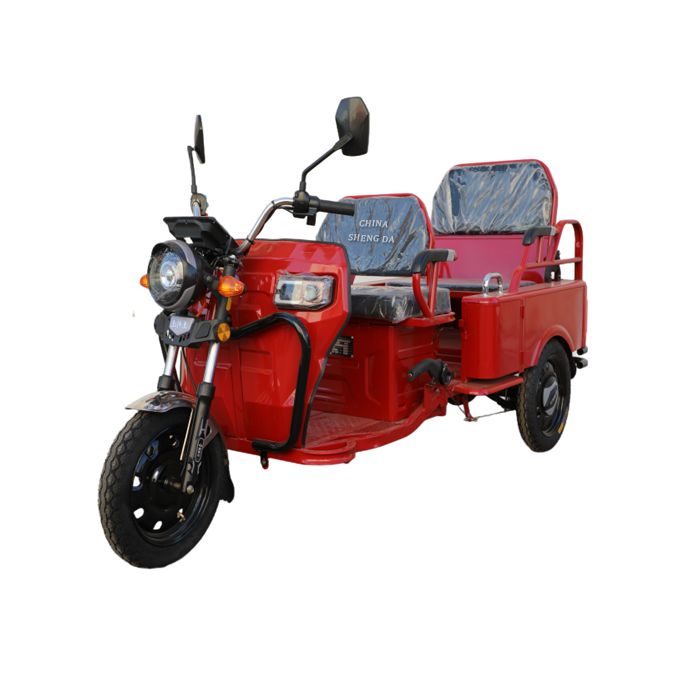
2. The fully enclosed cabin design for short-distance passenger transportation and sightseeing is equipped with a double-sided glossy interior, providing a comfortable riding experience. It is suitable for elderly mobility, community shuttle services, scenic area sightseeing, and other scenarios. With low operational thresholds, no driving license or driving permit required, it has become an important supplement to urban short-distance passenger transportation.
3. The silent operation of agriculture and cold chain transportation does not disturb livestock and poultry, and zero exhaust emissions do not pollute the environment. With the optional enclosed insulated cargo box, it meets the green transportation needs of agricultural products and fresh ingredients. In engineering and municipal operations, high-end models integrate hydraulic dumping functions to improve the efficiency of building materials and debris transportation.
4. Special Scene Applications Folding electric tricycles, with their portability, have become an ideal choice for night market vendors, community delivery personnel, and the elderly. Their ability to fit into car trunks, elevators, or offices addresses the issues of urban traffic congestion and limited parking spaces.
The technological upgrade of the new Electric Tricycle not only enhances transportation efficiency but also promotes the green transformation of the urban transportation system. Its flexibility and intelligence demonstrate immense potential in areas such as last-mile logistics, short-distance passenger transportation, and agricultural transport. With further advancements in battery technology, the vehicle’s range is expected to increase by another 40%-50% in the future. Coupled with fast charging technology and intelligent interconnection systems, it will become an indispensable solution for the last mile of urban transportation.